
Nature’s Medicine; Healthy, Healing Herbs!
July 1, 2025
Emergency and the Domains of Well-being
October 1, 2025On the first of August an ancient tradition takes place in many areas of this country and across the world. It is celebrated in most English speaking countries on August 1st and nearly all of its many names originate from the Old English word, “hlafmaesse.” Lammas is on the recognized liturgical calendar to mark the blessing of the “First Fruits” harvest, referring primarily to the grain crop which is also the first of several reaping celebrations. It was also referred to as “loaf mass” and akin to “lamb mass” celebrated in the Cathedral of York. At this time loaves of bread were offered and blessed. Fruits and vegetables that were ripe at this time were also gathered. Many other feasts aligned with this festival as well.

In Ireland, for example, the celebration of Lughnasadh was renowned for sports activities, games and gifts to the earth goddess who was the mother of Lugh, the sun god. Feasting and games went on for a week or more, ushering in the first harvest’s arrival and the assurance that there would be bread in their cupboards through the year.
Today, many people still celebrate Lammas by baking a loaf of bread for the occasion. Sometimes they sing or chant a traditional song while kneading the bread in readiness for baking. Here are the lyrics to the Lugh Chant and the Blessing Chant (which can be chanted kneading or not, if you and your bread making team feel so inclined):
Lugh, Lugh,
Are you ever really dead?
We find you ever-living
In our bread, in our bread
Here is the bread-blessing chant, suitable for any religious persuasion:
Bless the dough,
Bless the bread,
Bless the diners,
In their lives ahead.
This musical chanting was similar to what the ancients did when waulking wool to prepare it for making garments, blankets and other needed woolens.
Here is a no-knead Lammas bread recipe to try all of this out:
Ingredients:
¼ teaspoon active yeast
1.5 cups warm water
3 cups flour (set aside more for dusting)
1.25 tsp salt
Preparation:
- Mix yeast in warm water, stir and let sit for 10-15 minutes.
- Add flour and salt and stir for 30 seconds.
- A shaggy dough will form.
- Cover with a tea towel and leave at room temperature for 12–18 hours.
- After the 12-18 hours, flour a piece of parchment or waxed paper that is placed on top of a cutting board, or just the cutting board can be floured.
- With a spatula, gently scrape down the sides of the bowl and turn the dough onto itself on the parchment paper-covered cutting board (or similar).
- Flip the bowl and let the dough sit on the paper/cutting board.
- Let this rest for 2 hours.
Baking in Dutch Oven:
- Preheat the baking oven to 475 degrees with Dutch Oven and lid already placed inside.
- When preheated remove the Dutch Oven, remove the lid and plop the dough inside, replace the lid. It will not fill up the Dutch Oven when done baking.
- Bake for 30 minutes with the lid on. Remove the lid and bread from the Dutch oven after ensuring it is baked through.
You don’t have to use this recipe; use any bread recipe you prefer. The idea is to make an enjoyable loaf of bread for this celebration. Simply savor it and what it represents.
The most important aspect of Lammas (regardless of what it was called) was an evaluation of the success of the first harvest. These questions were asked by the community: Was the crop productive? Did the work get done as well as it should have? Were the seedlings strong and the harvest bountiful? And the biggest question was whether the harvest was sufficient for grain supplies to last a year. These days, Lammas has become a time when we personally check-in on ourselves, our goals, and what we are aiming to achieve.
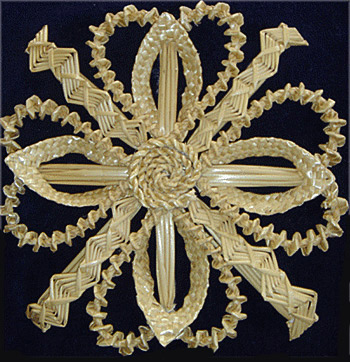
To protect and bless the fields, many cultures created wheat art to place on the last sheave left in the field drying to be used as seed next year. These beautiful pieces of art often depicted the face of a guardian to protect the field throughout the winter. There is an example of straw art on the blog page located at https://asandyplace.com/blog/. Also, the National Association of Wheat Weavers has an interesting website filled with history, information about straw art, and many pieces on display, including the one I’ve featured. You can find them at: https://nawwstraw.org/.
This festival and holy day can be something the entire family enjoys.
It can also be a personal check-in on your goals and achievements.
At A Sandy Place we sincerely hope you will assess your first harvest carefully; how have you interacted with the goals you set for this year now that we have reached the first harvest? This sacred accountability is both part of the enjoyment and the continued planning for the things you want to achieve this year. There is still time and energy to achieve them.
As always, we are here to support your well-being and trust that this little bit of celebration and self-accountability may be just what you need. Email me with questions or if you need more information.
As always,
Sandra (Sandy) L. Place